


Car Diagnostics
Testing that helps identify the cause of a warning, symptom, no-start, or electrical concern before repair.
Read more ›Land Rover and Range Rover sit at the complex end of the European luxury market. The lineup spans from the entry-level Discovery Sport and Evoque, to the volume-selling Range Rover Sport and Range Rover Velar, to the flagship Range Rover and full-size Discovery, to the recently relaunched Defender. The brand combines luxury interiors with genuine off-road capability - which means complex air suspension, sophisticated four-wheel-drive systems, and electrical architecture that rivals any Mercedes or BMW.
Land Rover shares engineering DNA with Jaguar under the JLR umbrella. Engines, transmissions, and electrical platforms cross over directly - what's true on a Jaguar F-Pace is largely true on a Range Rover Velar built on the same platform. The current engine lineup includes the 2.0L Ingenium I4 (P250, P300), 3.0L AJ126 supercharged V6 (legacy), 5.0L AJ-V8 supercharged (Range Rover Sport SVR, Defender V8), and the 5.0L AJ133 supercharged V8 in the discontinued Range Rover SC and Range Rover Sport HSE Dynamic.
Land Rover ownership requires accepting that complexity has a cost. The air suspension, terrain response system, infotainment, and electrical architecture all generate repair patterns over time. Owners of Range Rover Sport, Range Rover, and Discovery benefit from proactive service on air suspension, transmission, and supercharger gear oil to keep cascading repairs at bay.
Land Rover service follows the same JLR factory schedule as Jaguar.
JLR-approved synthetic. Castrol Edge Professional A5 0W-20 on modern Ingenium engines, 5W-30 on older AJ-V8. 10,000-mile factory interval; 7,500-mile interval recommended for high-mileage longevity on supercharged variants.
60,000 miles on Ingenium engines, 100,000 miles on AJ-V8.
Every 2 years.
ZF 8HP automatic on all modern Land Rovers - fluid + filter every 60,000-80,000 miles. Same service as Jaguar/BMW. Mandatory on Range Rover and Range Rover Sport given vehicle weight and load.
Land Rover's four-wheel-drive systems (single-speed transfer case on Sport/Velar/Evoque, two-speed transfer case on Defender and Range Rover) all require fluid service at 60,000 miles. The transfer case in particular has a wet clutch pack that wears with old fluid.
Land Rover air suspension is the most complex part of the vehicle. Compressor service interval is roughly 100,000 miles or whenever the compressor starts cycling longer than normal. Replacement at 80,000-120,000 miles is common. Air strut leaks are the more frequent failure - one corner sagging overnight is the symptom.
JLR coolant requirement, factory interval (every 5 years).
Same as Jaguar - Eaton supercharger gear oil at 100,000 miles for longevity.
Premium 91+ octane required on every gasoline Land Rover.
SYSTEM-FOCUSED SERVICE
A clunk, vibration, pull or change in ride on a Land Rover / Range Rover does not identify one part by itself. Inspection distinguishes suspension, steering, tire and brake-system causes.
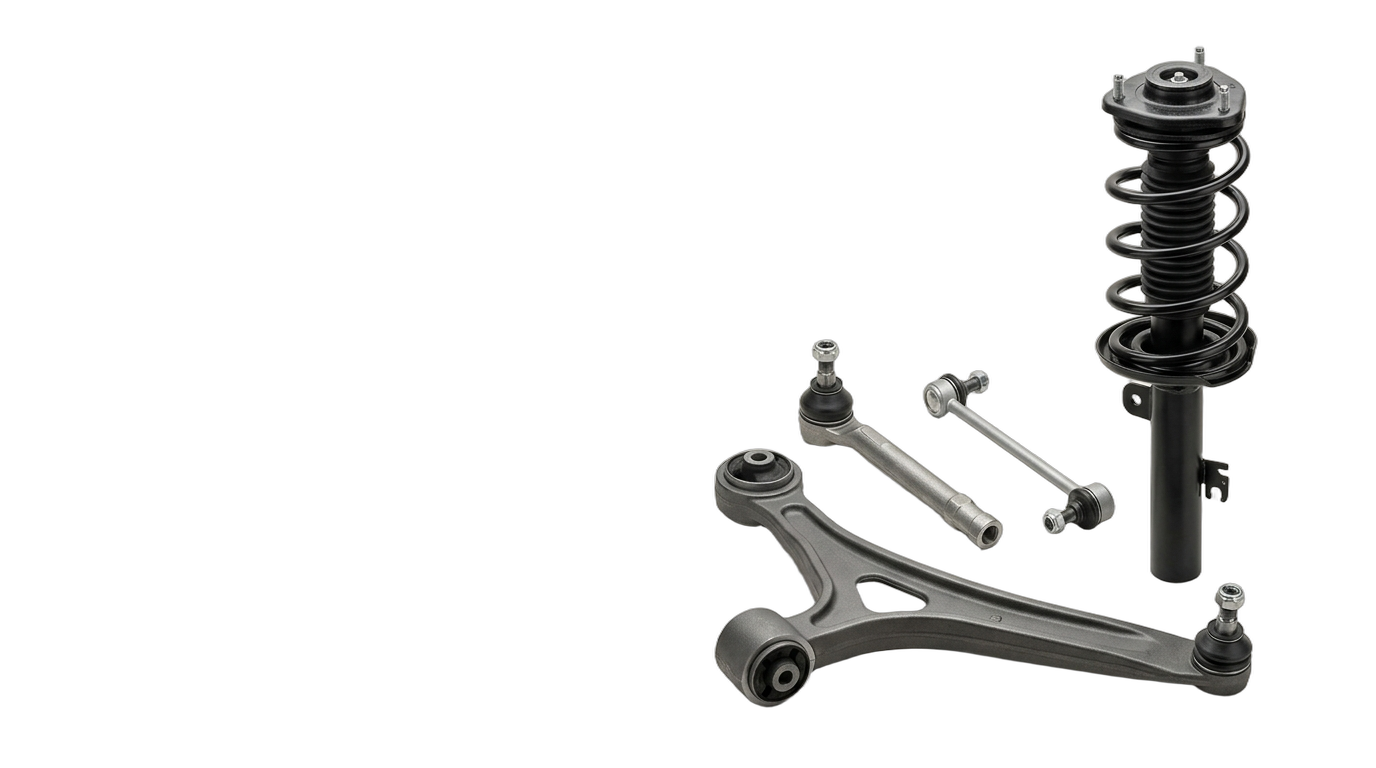
Land Rover repairs are expensive but very predictable by model and engine. The Range Rover Sport and Range Rover patterns are common across these models.
Land Rover repairs respond well to proactive maintenance. Cars past 150,000 miles are more likely to remain dependable when owners keep up with air suspension service, transmission fluid, and supercharger gear oil. Cascading repair bills are more likely when these services are ignored.
YOUR NEXT STEP
Choose a preferred day and arrival window online. The shop will follow up during business hours to confirm it.
An overnight sag at one corner is the classic sign of a leaking air strut, and air suspension is the system most known for wearing out on Land Rovers. The leak also forces the compressor to run longer cycles, which is exactly what finishes off compressors, already a typical failure in the 80K to 120K range. Repairing the leaking corner early often saves the compressor, so deal with it before two jobs come due at once.
Quite possibly. The transfer case, whether single speed or two speed, needs a fluid change around 60K miles because its wet clutch pack wears quickly once the fluid is spent. A worn clutch pack is precisely what triggers AWD fault codes. If that service has never been done, start there before assuming the hardware itself has failed.
Some models carry a main battery plus a secondary one supporting the stop-start and electrical systems, and both must be registered to the vehicle with diagnostic equipment after replacement. A physical swap without registration leaves the charging system managing the new batteries incorrectly, which shortens their life and invites odd electrical faults. For battery work on these trucks, a shop with the right diagnostics saves headaches later.
On these vehicles the usual cause is warped front rotors rather than pads alone. Land Rovers are heavy, and that weight punishes rotors faster than on lighter cars, especially with heavy loads or hard freeway braking. The lasting fix is quality rotors with fresh pads, and it should not wait long, because braking control degrades as the warp gets worse.
Testing that helps identify the cause of a warning, symptom, no-start, or electrical concern before repair.
Read more ›System-level repair for soft pedals, leaks, warnings, changed stopping, calipers, hydraulics, and ABS concerns.
Read more ›A European-vehicle specialty hub for choosing the right diagnostic, repair, or maintenance path.
Read more ›