
Car Diagnostics
Testing that helps identify the cause of a warning, symptom, no-start, or electrical concern before repair.
Read more ›MINI is essentially a small-format BMW, and that's both its appeal and the source of most of its known issues. The Cooper, Cooper S, John Cooper Works (JCW), Clubman, and Countryman share engineering DNA - and many actual parts - with their BMW siblings, but they're packaged into a smaller, lighter, more agile chassis. The defining MINI moment is the 2002 reintroduction under BMW ownership; everything from that point forward has been BMW engineering wearing a MINI badge.
The engine family history matters more than the model on a MINI. The earliest BMW-era MINIs (R50/R52/R53, 2002-2008) ran a "Tritec" engine - a Chrysler/BMW joint venture that's mechanically simple but increasingly rare. The 2007-2014 R56 generation introduced the Prince family of engines built jointly with PSA Peugeot - these are the N12 (1.6L naturally aspirated), N14 (1.6L turbo Cooper S, 2007-2010), N16 (refined NA, 2010-2014), and N18 (refined turbo, 2010-2014). The Prince engines have a well-known list of failure patterns we'll detail below. The F56 generation (2014+) moved to BMW's modular B-series engines - B38 1.5L turbo three-cylinder in the base Cooper, B46/B48 2.0L turbo four-cylinder in Cooper S, JCW, and Countryman.
MINI ownership rewards the same approach as BMW ownership: stay on the factory service schedule, use BMW/MINI-approved fluids, address small issues before they cascade. Skipping the timing chain service window on an N14 doesn't just cost you a timing chain - it can destroy the engine. The right diagnostics (BMW ISTA, the same tool used on BMWs) catch the patterns early. Daily-driven Coopers and Countrymans can offer long-term reliability when properly maintained.
MINI service follows the BMW Condition Based Service (CBS) framework - the same system that tells a 3 Series when it needs an oil change tells a Cooper the same thing. The car calculates remaining service life from engine load, oil deterioration sensors, and driving patterns, then displays a service due indicator. CBS intervals are typically generous on paper (8,000-15,000 miles for oil), but generous-on-paper means too-long-in-practice for most US driving - we recommend 7,500-mile oil change intervals to extend engine life, especially on the direct-injection turbo Prince and B-series engines where fuel dilution accelerates oil breakdown.
MINI specifies BMW Longlife approvals (LL-01 / LL-04 / LL-12FE / LL-14FE+) depending on engine family and year. The Prince N14/N18 turbos and B-series engines need the correct viscosity and approval rating - incorrect oil causes timing chain wear codes and oil consumption issues. Always check the cap; don't assume any 5W-30 will work.
60,000 miles on most modern turbo MINIs (NGK platinum), 100,000 miles on some NA variants. Direct-injection engines benefit from earlier replacement at 40,000-50,000 miles if drivability issues appear - coil-on-plug ignition shows failures immediately as misfires.
BMW DOT 4 LV mandatory every 2 years. MINIs share BMW braking architecture and are equally sensitive to moisture-contaminated fluid. Ignoring this service can contribute to ABS pump failures on Coopers past 80,000 miles.
The Aisin 6-speed automatic in R56/R57/R58 MINIs is genuinely "lifetime fill" by Aisin's requirement - but lifetime doesn't mean it never benefits from a fluid service. We recommend fluid change at 80,000-100,000 miles to extend the valve body's life. The newer Aisin 7-speed dual-clutch (F56 onwards) and ZF 8HP (Countryman F60 high-trim) absolutely need fluid services on BMW's recommended intervals (~60,000 miles for the DCT, 60,000-80,000 for the 8HP). The Getrag 6-speed manual benefits from fluid service every 60,000 miles.
BMW G48 coolant, factory interval (every 4-5 years). Same mixed-metal cooling chemistry as BMW - generic coolant causes corrosion that eats water pumps and heater cores. The electric water pumps on Prince N14/N18 and B-series engines are wear items themselves, typically failing between 60,000 and 100,000 miles regardless of coolant condition.
Every battery replacement on a 2007+ MINI with IBS (Intelligent Battery Sensor) requires registration to the DME via BMW/MINI ISTA or compatible diagnostic. An unregistered battery causes the charging system to under-charge a new battery and over-charge an old one - same problem as BMW, same fix.
Premium 91+ octane is required on every turbocharged MINI (Cooper S, JCW, and the turbo Countryman). The NA base Cooper can run 87 octane safely. Running 87 in a turbo MINI causes the same long-term damage as in a BMW - carbon buildup, knock, eventual injector and piston damage.
SYSTEM-FOCUSED SERVICE
Different MINI engines can use different timing layouts and intervals. The VIN, engine family, service history and current symptoms decide what should be inspected or serviced.
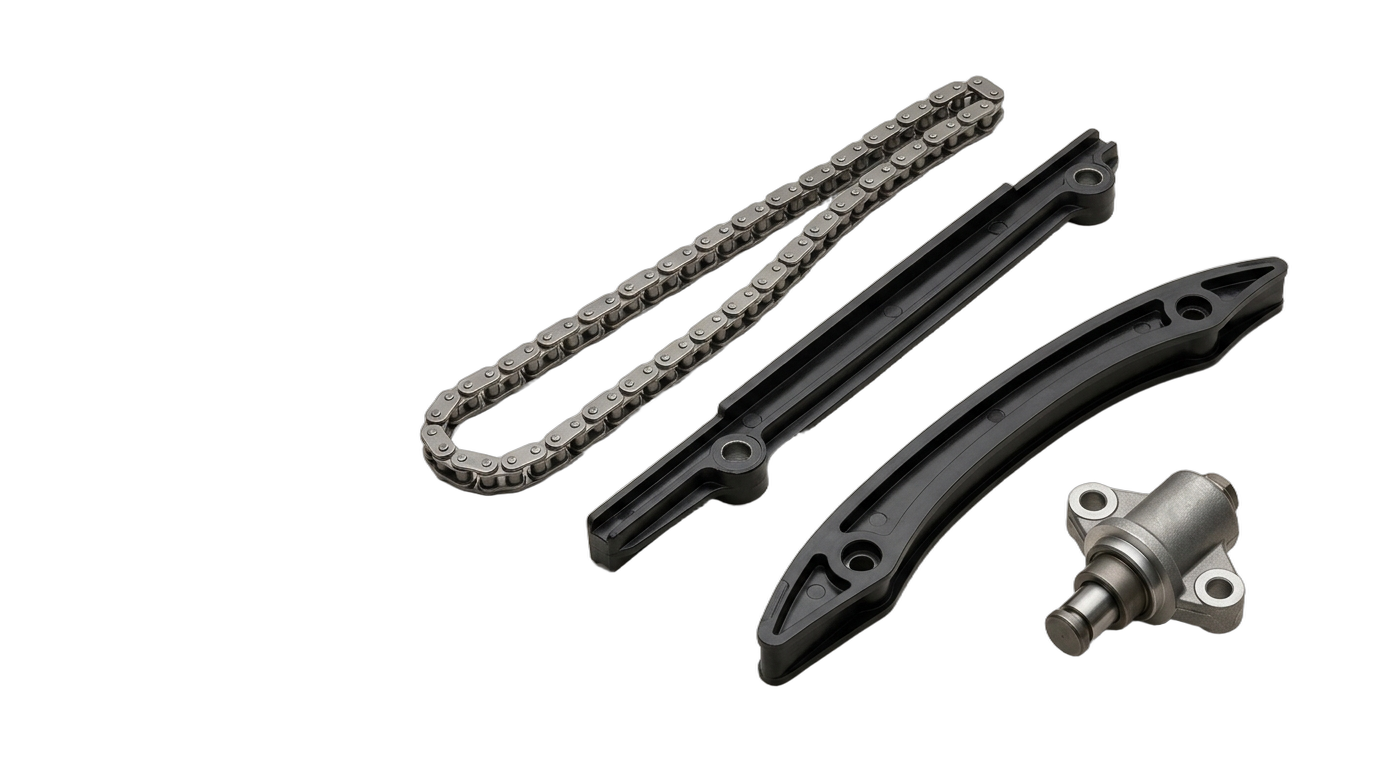
MINI repairs cluster heavily by engine family and generation. The R56 Cooper S with the N14 engine is genuinely the most repair-prone MINI ever built - the engine that earned MINI its "great car, expensive to own" reputation. The newer F56 generation with BMW B-series engines is significantly more reliable but still has its own pattern list.
MINI repairs are predictable when you know the engine family. Most "expensive MINI repairs" are timing chains and water pumps on N14/N18 engines - catch them before the chain skips and it's routine; ignore the rattle and it gets expensive fast.
YOUR NEXT STEP
Choose a preferred day and arrival window online. The shop will follow up during business hours to confirm it.
Very likely. The N14 turbo engine in 2007-2010 R56 Cooper S and JCW models is known for timing chain stretch and tensioner wear, and it can appear between 60,000 and 100,000 miles. Cold-start rattle and P0016-type codes are the classic warning signs. Caught early it is a straightforward chain and tensioner replacement, but a chain that jumps timing can damage the engine, so have it checked soon.
Yes. On 2007 and newer MINIs with the IBS battery sensor, the new battery must be registered to the car with diagnostic equipment. An unregistered battery gets undercharged or overcharged, which shortens its life and can trigger problems in the FRM footwell module. Any shop that installs your battery should be registering it in the same visit.
It is. MINI specifies BMW DOT4 LV fluid on a two-year interval because brake fluid absorbs moisture as it ages. Old or moisture-contaminated brake fluid can contribute to ABS pump problems as MINIs age. Staying on the two-year schedule is the simplest protection for the whole brake system.
It depends on the engine. Turbocharged MINIs like the Cooper S and JCW need 91 octane or better to stay out of knock and protect the turbo hardware. The base naturally aspirated Cooper is designed to run on 87, so premium is not necessary on that one.
Testing that helps identify the cause of a warning, symptom, no-start, or electrical concern before repair.
Read more ›System-level repair for soft pedals, leaks, warnings, changed stopping, calipers, hydraulics, and ABS concerns.
Read more ›A European-vehicle specialty hub for choosing the right diagnostic, repair, or maintenance path.
Read more ›