


Car Diagnostics
Testing that helps identify the cause of a warning, symptom, no-start, or electrical concern before repair.
Read more ›Volvo occupies a distinct lane in the European market - Swedish engineering focused on safety, longevity, and understated luxury rather than the performance-and-prestige positioning of German rivals. The current Volvo lineup centers on the XC60 and XC90 SUVs (the volume sellers), the smaller XC40, the S60 and S90 sedans, the V60 and V90 wagons.
Volvo's modern engine family is unusually consolidated. Since 2014, virtually every gas Volvo has used variants of the same 2.0L four-cylinder ("Drive-E" engine, B4204 series) in different states of tune - turbocharged-only (T4, T5), twin-charged (supercharger plus turbocharger - T6, T8). This consolidation means service knowledge from one Volvo transfers directly to most others. Older Volvos (pre-2014) used the legacy 5-cylinder (B5254) and 6-cylinder (B6304/T6 inline-six) engines, which have their own service personalities.
Volvo ownership philosophy aligns with Mercedes more than BMW - owners often choose the brand for longevity, and consistent service can support that goal. Many Volvo owners keep their cars for the long term, which makes preventive maintenance especially important. Skipping a timing belt service on an older 5-cylinder or ignoring a PCV (positive crankcase ventilation) failure on a 6-cylinder can turn a routine service into a major repair.
Volvo service intervals are generally similar to other European brands but with specific nuances around the engine family.
Modern Drive-E engines (2014+) use synthetic oil approved to Volvo VCC RBS0-2AE - there isn't a true off-the-shelf equivalent, but Castrol Edge Professional A5 0W-20 is what Volvo dealers actually use. Service interval is 10,000 miles per Volvo's recommendation, but we suggest 7,500 miles for high-mileage longevity on the turbocharged and twin-charged variants. The supercharger on T6 / T8 engines is lubricated by the engine oil, so clean oil matters more than on a single-turbo engine.
60,000 miles on Drive-E turbo engines (NGK or factory-approved iridium), 100,000 miles on some legacy 5-cylinder variants. Direct-injection engines accumulate carbon and benefit from earlier inspection.
Every 2 years. Modern Volvos with electronic brake systems are sensitive to moisture-contaminated fluid like all European cars. Skipping causes ABS pump and brake booster issues.
The Aisin 8-speed automatic in modern Volvos (TG-81SC) needs fluid service every 60,000-80,000 miles using Aisin-approved ATF (similar to Toyota WS but Volvo-specific). The older 5-speed and 6-speed Geartronic automatics also benefit from fluid changes - they're not actually "sealed for life" despite the marketing. The CVT used in some XC70 and S80 models needs more frequent fluid service (every 30,000 miles is reasonable) to extend its life.
The coolant must meet the vehicle's factory requirements. Generic green coolant can damage a mixed-metal cooling system. Service timing and method depend on the model, history, and coolant condition.
The B5254 5-cylinder and B6304 6-cylinder engines (pre-2014) use a timing belt that requires replacement every 105,000 miles. This is a non-negotiable interference engine - a broken belt destroys the engine. Modern Drive-E engines use a timing chain, no belt service required.
On the legacy inline-six (T6, S80, V70, XC90) the PCV system is a known weak point. Clogged PCV system causes oil leaks, rough running, and eventually engine damage. The "PCV test kit" exists for this engine - service interval is roughly every 100,000 miles or whenever symptoms appear.
Premium 91+ octane is required on every turbocharged Volvo. The Drive-E twin-charged engines especially need 91+ to avoid knock - using lower-octane fuel can reduce performance and increase knock risk on a T6 or T8.
SYSTEM-FOCUSED SERVICE
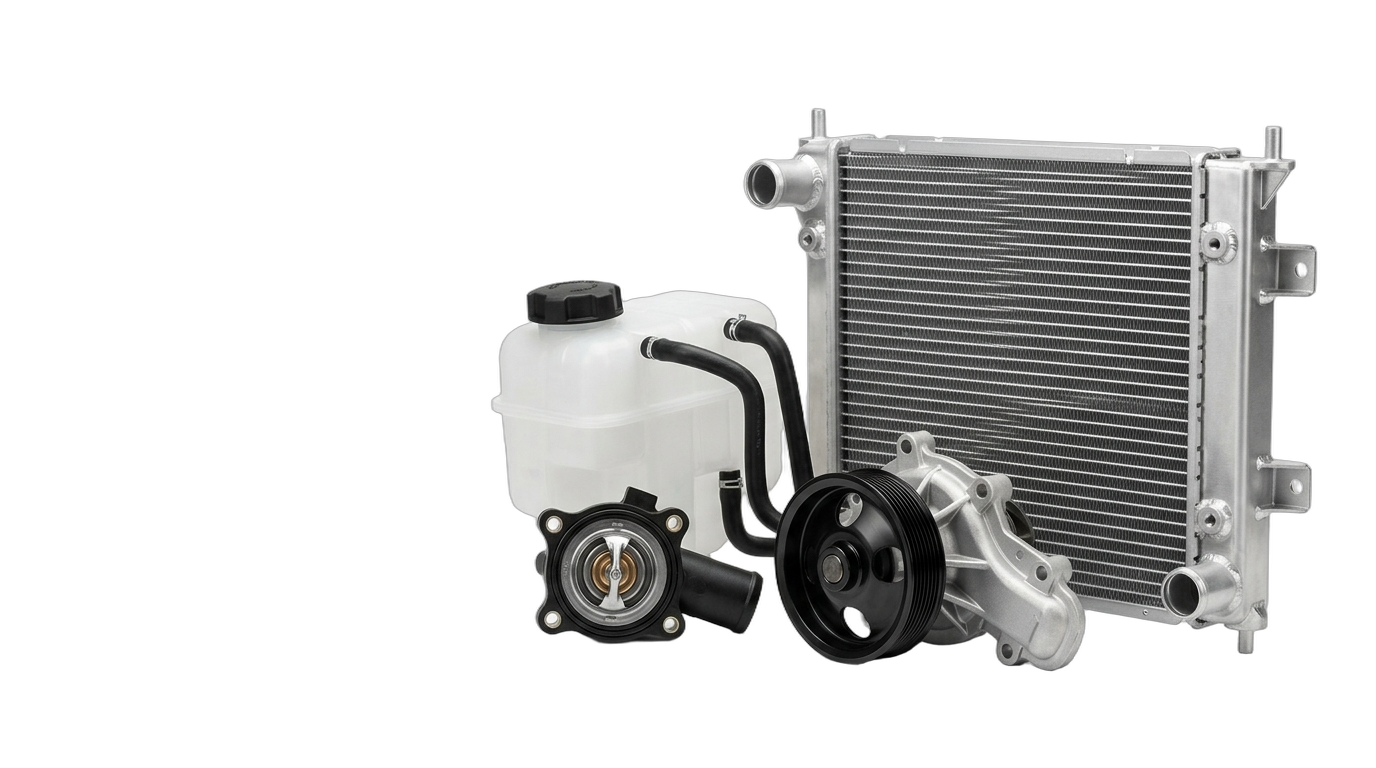
A leak or temperature change on a Volvo can involve circulation, pressure, airflow, sensors or controls. The repair plan follows what the inspection actually finds.
Volvo repairs cluster differently from BMW or Mercedes - fewer dramatic engine failures, more electrical and accessory issues, and a recurring theme of "PCV-related" problems on the legacy inline-six.
Volvos respond especially well to consistent maintenance. Volvos are more likely to remain dependable at high mileage when their owners stay on schedule. Cascading repair bills are more likely when PCV failures or timing-belt concerns are ignored.
YOUR NEXT STEP
Choose a preferred day and arrival window online. The shop will follow up during business hours to confirm it.
The legacy B5254 five-cylinder and B6304 six-cylinder engines use a timing belt with a 105K mile service interval, and both are interference designs. If the belt fails, pistons meet valves and a maintenance item becomes an engine repair. If you are near or past 105K with no record of a belt change, treat it as due right now.
Almost certainly. Volvo's driver assistance systems such as City Safety, BLIS and Pilot Assist need recalibration with the factory VIDA system after windshield replacement, bumper work or a wheel alignment. Until that happens the car can throw false alerts or disable the features entirely. Since these are collision avoidance systems, it is worth scheduling the calibration promptly.
Drive-E engines from 2014 onward require oil meeting Volvo's VCC RBS0-2AE requirement, and Castrol Edge Professional A5 0W-20 is what the dealers themselves use, on a 10K mile interval. An off-the-shelf synthetic without that approval is not equivalent protection for these small turbocharged engines. Wherever you service the car, confirm the approval on the bottle, not just the viscosity.
Clogged sunroof drains are the usual culprit on older XC90 and S60 models. Trapped water works its way down to the central electronic module, the CEM, and a wet CEM causes random warning lights and electrical faults. Clearing the drains early is quick, while a water-damaged CEM is a far bigger repair, so do not ignore symptoms that follow rain.
Testing that helps identify the cause of a warning, symptom, no-start, or electrical concern before repair.
Read more ›System-level repair for soft pedals, leaks, warnings, changed stopping, calipers, hydraulics, and ABS concerns.
Read more ›A European-vehicle specialty hub for choosing the right diagnostic, repair, or maintenance path.
Read more ›