
Overheating, coolant loss, a rising temperature gauge, weak cabin heat, steam, or a puddle under the vehicle can come from different cooling-system problems. The symptom shows what is happening; it does not prove which part needs repair.
At Gonzalez Auto Mechanic, we review the vehicle information, inspect the cooling system, use information from the vehicle's computer when it helps, and perform focused hands-on tests that fit the concern. Luis explains the findings in plain language and provides a written estimate before any repair work begins.
When to stop driving
If the temperature gauge reaches red, a temperature warning appears, steam is coming from under the hood, or coolant is escaping quickly, stop in a safe place and turn off the engine. Do not keep driving to see if it cools down, and do not open the cap while the system is hot.
Call the shop and describe what happened before trying to drive farther.Leave the engine off and request an appointment online. Tell us what happened so we can follow up during business hours.
What we need to confirm
Before recommending repair, we need to know whether the vehicle is losing coolant, failing to control temperature, or showing another condition that affects cooling. A leak, an overheating event, a fan or control problem, and an engine problem can feel similar from the driver's seat.
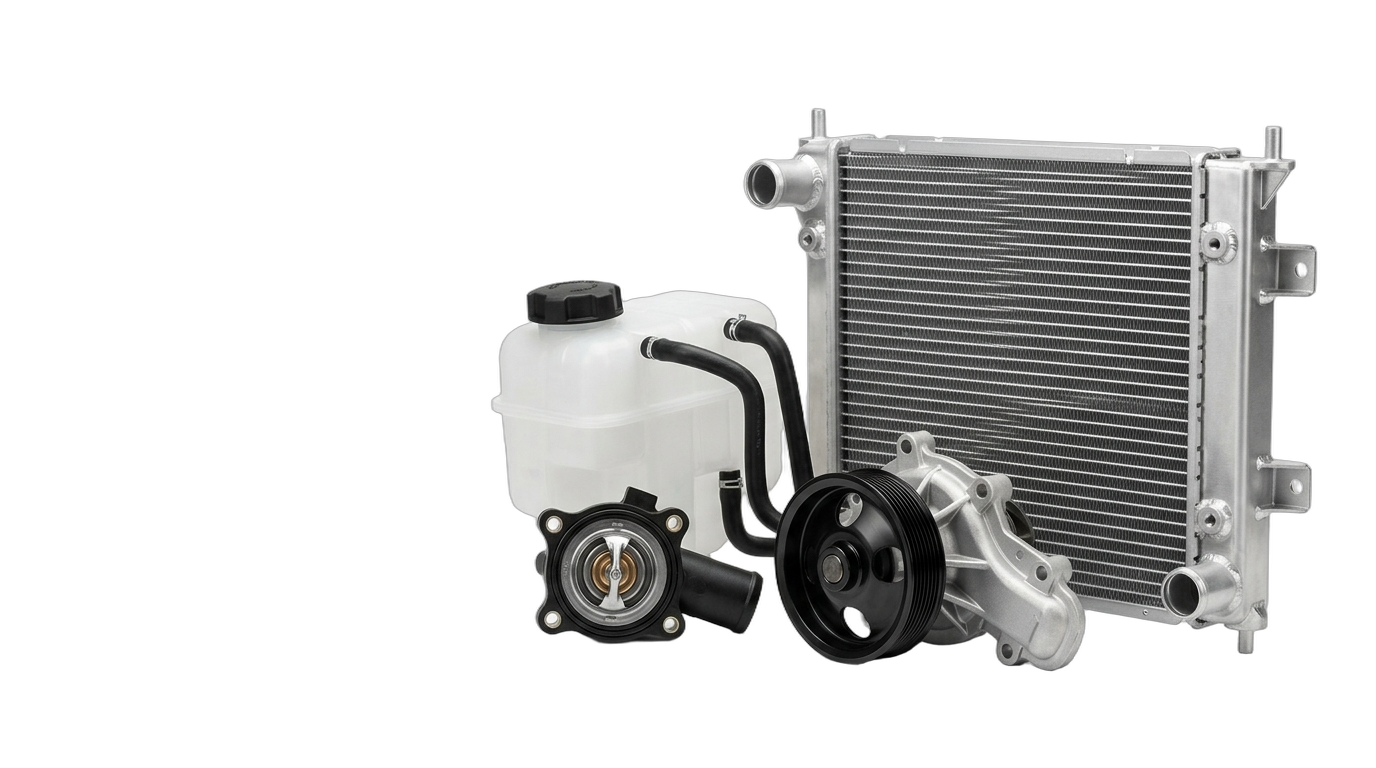
A radiator, hose, thermostat, water pump, fan, reservoir, or another part may be involved. The symptom alone does not identify the repair, and a warning light alone does not prove that the cooling system is the cause.
How we find the cause
We start with what you noticed: when the temperature changes, whether coolant is visible or needs to be added, whether the cabin heat changed, and whether the vehicle has overheated or lost power. We inspect the system, review the vehicle information, and use focused tests to separate a leak, a circulation problem, a temperature-control problem, a fan or control issue, or a condition that belongs on another service path.
Sometimes a cooling concern is connected to an engine or electrical problem. We explain the next useful check before recommending work.
Repairs based on the findings
Once the cause is supported, we explain the repair path. That may involve repairing or replacing a leaking part, radiator, hose, thermostat, water pump, fan, reservoir, or another cooling-system component. We do not choose a part simply because it is a common failure.
Repair begins only after you approve the written estimate. If the findings point to a broader engine, electrical, or diagnostic issue, we explain that next step instead of presenting it as a cooling-system failure.
Cooling-system repair and coolant service are different
An active leak, overheating, or a confirmed cooling-system fault belongs on this repair path. Scheduled coolant replacement is a separate maintenance decision. We can service coolant on vehicles that use it and select the coolant required by the vehicle manufacturer.
Cabin A/C concerns such as warm air or weak airflow belong to a separate service.