Beat the heat with an A/C recharge · Only $120
Mon-Fri: 8:00 AM to 5:00 PMSat: 8:00 AM to 3:00 PM
Español

Alfa Romeo REPAIR AND MAINTENANCE IN WILMINGTON, CA

The modern U.S. Alfa Romeo lineup is centered on the Giulia sedan and Stelvio SUV. They combine direct-injection turbo engines, an electronically controlled transmission, fast network communication, and tightly integrated body and drivetrain modules. That integration is part of the driving experience, but it also means a coolant warning, rough idle, reduced-power message, or no-start can require more than a generic code reader.

About Alfa Romeo service

Alfa Romeo and Maserati are Italian sibling brands within Stellantis. We already service Maserati, so the diagnostic discipline required by complex Italian vehicles is familiar to us. The relationship does not mean every engine, platform, module, or part is shared. We use Alfa Romeo vehicle data and procedures for the Giulia or Stelvio in front of us instead of treating it as a Maserati with another badge.

Accurate voltage, clean network communication, correct fluids, and current calibration matter on these cars. A weak battery can create several warnings, while a real engine or transmission fault can trigger many of the same messages. Dealer-level diagnostic equipment and make-specific service procedures help us separate causes, verify repair steps, and explain priorities to Alfa Romeo drivers across the Harbor Area and South Bay from our Wilmington shop.

Common maintenance needs

Follow the schedule for your exact engine and model. Los Angeles heat, short trips, traffic, and low battery charge can justify closer inspection of these systems.

Alfa Romeo Maintenance Schedule
  • Engine Oil and correct standard: Use the oil viscosity and approval specified for the installed engine, and verify the level between services. A low level, oil smell, fresh residue, startup noise, or pressure warning needs prompt attention. Correct oil supports the turbocharger and valve-control systems, but oil alone cannot repair an existing mechanical or electrical fault.
  • Cooling System and Pressure Testing: Watch for repeated low coolant, a sweet smell, damp residue around hose connections, weak heat, or rising temperature. We pressure-test the system and inspect the reservoir, cap, hoses, O-rings, radiator, pump, and related connections. A known bulletin or recall population guides the inspection, but the VIN and active leak determine the next step.
  • Battery, Charging, and Network Voltage: Low voltage can produce multiple warnings, disabled features, starting trouble, or lost communication. We test battery state, charging output, voltage drop, grounds, and network health before clearing codes or condemning modules. Replacing a battery without checking registration, calibration, or the cause of discharge can leave the original problem unresolved.
  • Spark Plugs, Coils, and Engine Calibration: A shaking idle, flashing check-engine light, reduced power, or fuel smell calls for prompt testing. Spark plugs and coils are only part of the system. Injector control, air leaks, fuel pressure, wiring, PCM output, software level, and mechanical condition can create similar misfire evidence.
  • Transmission and Drivetrain Operation: Report harsh engagement, delayed response, shift flare, vibration, reduced power, or a drivetrain warning. We check codes across related modules, fluid evidence, live data, adaptation values, calibration, and mechanical operation before recommending service or internal work. A warning message does not identify which component failed.
  • Brakes, Suspension, and Tires: Alfa Romeo steering feel depends on healthy tires, alignment, bushings, links, dampers, bearings, and brakes. Tell us about clunks, wandering, uneven wear, vibration, squeal, or a pulsing pedal. Potholes can expose wear quickly, but an inspection is needed to separate impact damage from normal service needs.

SYSTEM-FOCUSED SERVICE

Cooling concerns are system concerns

A leak or temperature change on a Alfa Romeo can involve circulation, pressure, airflow, sensors or controls. The repair plan follows what the inspection actually finds.
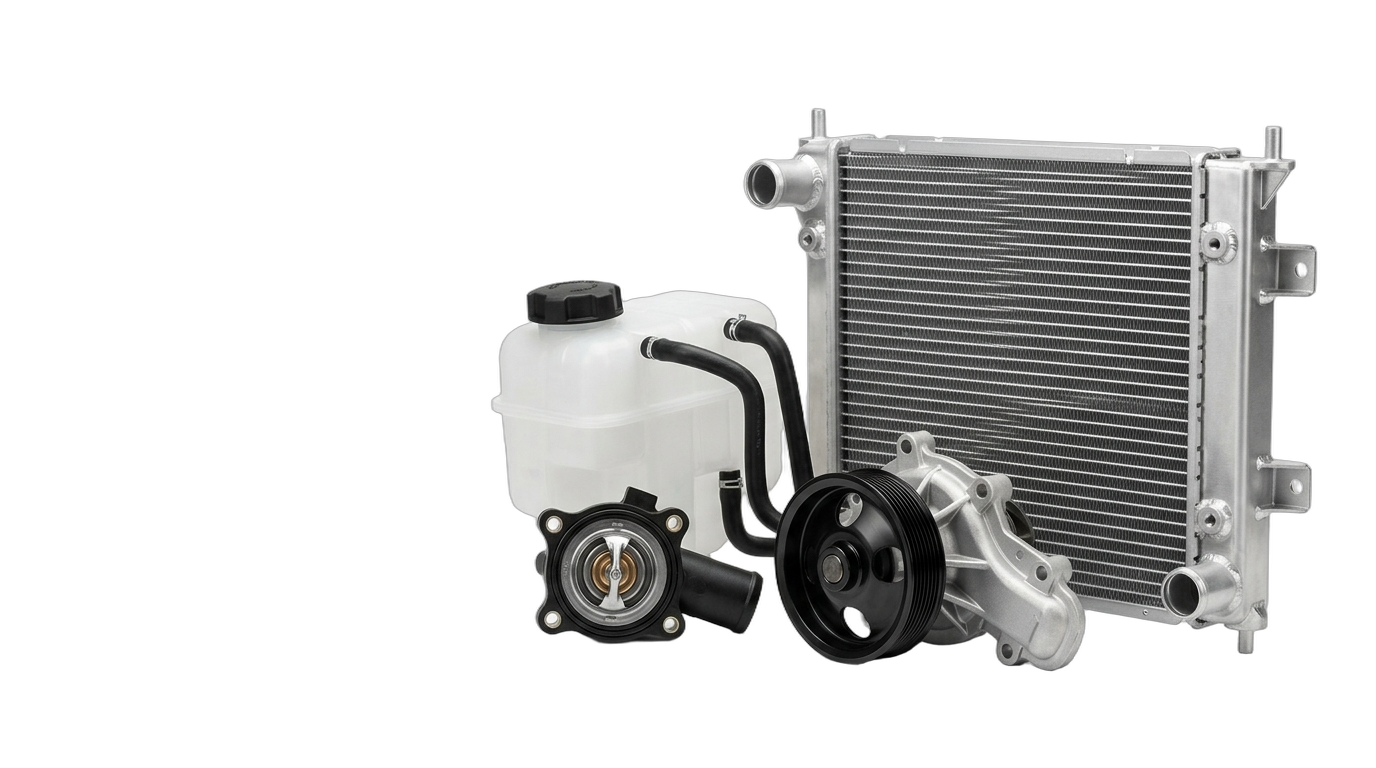
A radiator, expansion tank, thermostat and water pump shown as a clean isolated cooling-system group

Common repair concerns for Alfa Romeo vehicles

We start with the symptom and test the affected systems. A bulletin, code, or familiar model pattern narrows the path but does not replace diagnosis.

Common Alfa Romeo Repair Patterns
  • Giulia or Stelvio Smells Like Coolant or Loses Reservoir Level: A 2017 Giulia 2.0L has a documented coolant-leak path at a hose O-ring, while certain 2018 to 2019 Stelvio Quadrifoglio VINs were included in a cooling-hose safety recall. Other hoses, the reservoir, cap, radiator, pump, and connections can leak too. We pressure-test the system and verify the VIN. Open recall work is referred to an authorized Alfa Romeo service center rather than sold as a paid repair at our shop.
  • 2023 Giulia or Stelvio 2.0 Shakes, Misfires, or Shows Reduced Power: Certain 2023 2.0L vehicles have a documented pattern involving PCM electrical overstress to the ignition coils, misfire codes in the P2300 range, and a PCM reprogramming path. That reprogramming is tied to Customer Satisfaction Notification 46A, which an authorized dealer performs at no charge when the campaign is open. We check VIN and campaign status first and refer open campaign work to Alfa Romeo. When it does not apply, we test software level, coil control, plugs, injectors, fuel and air data, wiring, and mechanical condition before recommending repair.
  • Several Warnings Appear or the Car Will Not Start: Low battery charge, charging faults, voltage drop, grounds, network communication, calibration, and real module failures can all create a crowded warning display. Some 2017 to 2018 Giulia service information specifically directs attention to low charge and body-control calibration in certain complaints. We test power and communication first, then follow the modules that remain offline or report an active fault.
  • Keys or Body Features Stop Working After a Module Fault: Windows, locks, lighting, starting authorization, keys, and other body features depend on the body control module and network. If testing confirms that a Giulia or Stelvio BCM must be replaced, the supported procedure can require VIN writing, PROXI configuration and alignment. We verify exact coverage before promising programming, and we do not replace a module until its power, ground, wiring, and communication have been tested.
  • Drivetrain Warning, Harsh Shift, or Reduced Power: These symptoms can begin with engine torque control, transmission adaptation, low voltage, calibration, wiring, a sensor, fluid loss, or mechanical wear. We scan the engine, transmission, and related chassis modules together, then compare command and response data. That prevents a drivetrain message from being treated automatically as a failed transmission or a software-only problem.

YOUR NEXT STEP

Ready to have your Alfa Romeo checked?

Choose a preferred day and arrival window online. The shop will follow up during business hours to confirm it.

Book an appointment

Alfa Romeo questions we hear

Why does my Giulia or Stelvio smell like coolant or keep losing level?

A 2017 Giulia 2.0L has a documented hose O-ring leak path, and certain 2018 to 2019 Stelvio Quadrifoglio VINs had a cooling-hose recall. Those are not the only possible sources. We pressure-test the complete system and check the VIN. Open recall work is referred to an authorized Alfa Romeo service center.

Does every 2023 Giulia or Stelvio misfire need PCM reprogramming?

No. Certain 2023 2.0L vehicles have a documented PCM and ignition-coil electrical overstress pattern with specific codes and a reprogramming path tied to Customer Satisfaction Notification 46A. We check the VIN and campaign first because an authorized dealer performs open campaign work at no charge. When it does not apply, plugs, coils, injectors, fuel, air, wiring, and mechanical condition can produce the same symptoms, so we test before programming or replacing anything.

Are all the warnings on my Alfa Romeo caused by a weak battery?

No. Low charge can create multiple warnings or communication faults, but charging, grounds, wiring, calibration, sensors, modules, and real engine or transmission failures can do the same. We test voltage and network health first because it gives the remaining codes and symptoms a reliable foundation.

Can you diagnose electronic problems on Alfa Romeo vehicles?

Yes. We use professional diagnostic equipment to test warning lights, electrical faults, low-voltage problems, and network communication before recommending repair work.

Related to Alfa Romeo repair

Car Diagnostics

Testing that helps identify the cause of a warning, symptom, no-start, or electrical concern before repair.

Read more ›

Brake Repair

System-level repair for soft pedals, leaks, warnings, changed stopping, calipers, hydraulics, and ABS concerns.

Read more ›

Oil Change

Oil and filter service using the right oil for your vehicle.

Read more ›

European Auto Repair

A European-vehicle specialty hub for choosing the right diagnostic, repair, or maintenance path.

Read more ›