


Car Diagnostics
Testing that helps identify the cause of a warning, symptom, no-start, or electrical concern before repair.
Read more ›BMW is the second-largest piece of Gonzalez Auto Mechanic's specialty work, and the brand most closely tied to the shop's "European specialist" reputation alongside Mercedes. The BMW lineup is unusually broad: the 2 Series coupe and Gran Coupe, the volume-leading 3 Series and 4 Series, the 5 Series sedan and Touring wagon, the 7 Series and 8 Series flagships, the X1 through X7 SUV family, the Z4 roadster, the full M Performance line (M2, M3, M4, M5, M8, X3M, X4M, X5M, X6M, and the M340i / M440i / M550i variants). Each generation runs different engine, transmission, and electrical architecture - what's true on an E90 3 Series isn't true on a G20 3 Series, and the right diagnostics matter.
BMW repair for Wilmington and nearby communities
SYSTEM-FOCUSED SERVICE
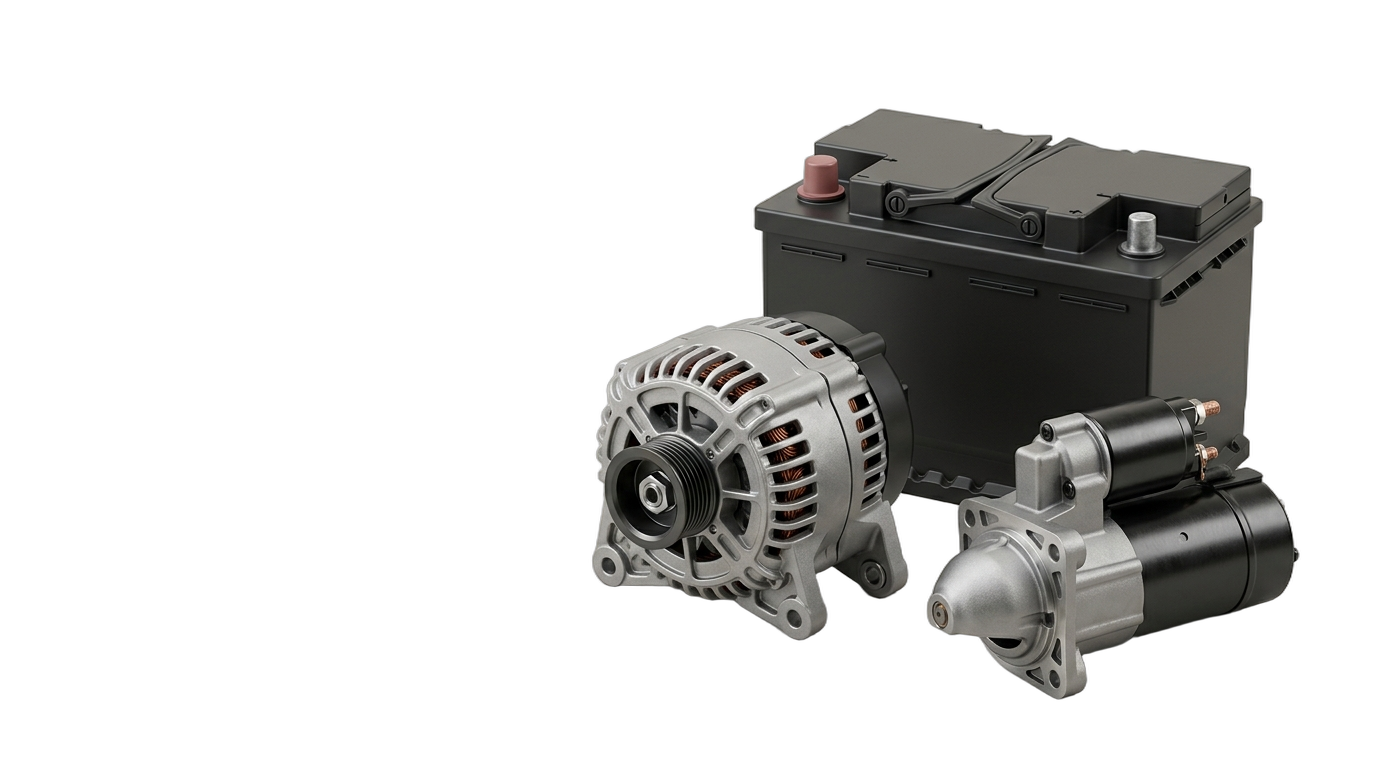
On a BMW, battery condition, charging output, power supply, wiring and control communication can produce similar symptoms. Testing separates them before parts are chosen.
The defining BMW engineering trait is the inline-six. From the M54 of the early 2000s, to the magnesium-block N52, to the twin-turbo N54 that defined the modern "fun BMW" era, to the current B58 that powers the M340i / Z4 / Toyota Supra, BMW has built its identity on smooth straight-six power. Mixed in are the turbocharged four-cylinders (N20 / N26 then B46 / B48), the V8 variants (N62 / N63 / S63), and the high-revving M-only engines (S55 / S58 / S65 / S85). Every BMW engine family has its own set of known failure patterns - knowing the patterns is most of the job.
The other defining BMW trait is electrical complexity. A 2018 5 Series has more than 60 control modules talking on multiple CAN buses, FlexRay, and MOST networks. Replacement parts almost always need to be coded to the VIN via ISTA / ISTA+ or the appropriate BMW dealer-level diagnostic tool, and battery replacements require IBS (Intelligent Battery Sensor) registration before the charging system will function correctly. Servicing BMWs without the right diagnostic platform causes more problems than it solves - battery installed wrong leads to FRM (Footwell Module) failure, alternator overcharging, and premature battery death. Done right, a modern BMW will run past 200,000 miles. Done wrong, the repair bills compound fast.
BMW abandoned fixed mileage intervals in favor of Condition Based Service (CBS) on most US models - the car calculates remaining service life based on engine load, oil deterioration sensors, and driving patterns, then displays a service-due indicator. The CBS schedule isn't optional, and the longer-than-old-school intervals only work if the car actually gets the BMW-approved service it's calling for.
BMW Longlife-01 / LL-04 / LL-12FE / LL-14FE+ are the relevant approvals depending on engine and year. The default LL-04 5W-30 covers most current models; LL-14FE+ is required on B46 / B48 / B58 from ~2019. Service interval on CBS is typically 8,000-15,000 miles depending on driving, but the BMW factory-recommended 10,000-mile interval is too long for most US driving - we recommend 7,500-mile intervals for high-mileage longevity, especially on direct-injection turbo engines where oil dilution from fuel washdown accelerates wear.
60,000 miles on most modern turbo engines (NGK platinum), 100,000 miles on some N52 / B58 variants. Coil-on-plug ignition means failed plugs cause misfires immediately rather than gradual degradation.
BMW DOT 4 LV is mandatory every 2 years. Modern BMW braking systems (especially the iBooster / electromechanical assist on G-chassis cars and M variants) are sensitive to moisture-contaminated fluid - ignored brake fluid causes premature ABS pump failures that cost more to fix than the fluid would have cost ten times over.
The ZF 8HP automatic that BMW has used across nearly every model since 2009 is marketed as "sealed for life." It isn't. We recommend a fluid and filter (the filter is integrated with the pan) service every 60,000-80,000 miles using the correct ZF-approved ATF - Lifeguard 8 or equivalent. The 8HP is one of the best automatics ever built and can remain dependable when the fluid is serviced appropriately; abandon the service and the valve body wears, the torque converter shudders, and shift quality drops.
BMW G48 / N20F coolant on factory schedule (every 4-5 years on most models). The mixed-metal cooling systems on BMW engines need the correct chemistry - generic green coolant causes corrosion that eats water pumps and heater cores. The electric water pumps on N52 / N54 / N55 / N20 + later platforms are themselves a wear item, typically failing between 60,000 and 100,000 miles regardless of coolant condition.
Often forgotten. The rear differential on M cars and the transfer case on xDrive AWD models both need fluid service at 60,000 miles. Skipped, the transfer case wet clutch wears and AWD-related fault codes appear.
Every battery replacement on a 2002+ BMW with IBS (most of them) requires registration to the DME via diagnostics - Foxwell, Carly, or BMW ISTA. An unregistered battery causes the charging system to under-charge a new battery and over-charge an old battery, and leads to FRM (Footwell Module) corruption from low-voltage events. Skipping registration is a common mistake when a shop does not complete the required programming.
Premium 91+ octane is required on every gas BMW. Same direct-injection knock-and-carbon issue as Mercedes - running 87 octane on an N20 / N55 / B48 / B58 / S55 / S58 causes long-term damage that's expensive to fix.
BMW repairs cluster heavily by engine family and chassis code. Once you know what engine the car has, you can predict the failure list. The patterns below are documented failure modes for these engines and chassis, not theoretical possibilities.
BMW repairs are predictable when you know the engine family and chassis code. The combination of proper diagnostics (ISTA / ISTA+), correct BMW-approved fluids, and brand-specific tooling turns most of these into routine work rather than emergencies.
For supported BMW vehicles, module requests may involve engine and transmission controls, FEM, FRM and other body modules, steering-lock or immobilizer systems, and gateways. We diagnose the fault and check the vehicle and part before recommending replacement, programming, coding or adaptation. Bring the BMW to the shop for this work.
See ECU & Module Diagnosis, Replacement and Programming for compatibility, sourcing, warranty and pricing terms.
YOUR NEXT STEP
Choose a preferred day and arrival window online. The shop will follow up during business hours to confirm it.
Every 2002 and newer BMW with the IBS battery sensor manages charging around the battery's exact age and type, so a replacement battery has to be registered to the DME with a scan tool. Skip that step and the car keeps charging for the old battery, which under- or over-charges the new one, shortens its life, and can corrupt the FRM footwell module into random light and window faults. If a parts store swapped your battery without registering it, we can code it to the car when the procedure is supported.
Yes, on the N20/N26 2.0 turbo used in the 2011-2017 328i, 428i, 528i, X1, X3, and X4, timing chain stretch and guide failure is the defining issue of the engine family. The first sign is usually a check engine light with cam correlation codes P0016 through P0019, sometimes with a whine or rattle from the chain. The fix is a new chain, guides, and tensioner, and timing matters: caught early it is a repair, ignored it lets the chain fail and take the engine with it.
The ZF 8HP fitted to nearly every BMW since 2009 is marketed as sealed for life, but it is not, and ZF itself supports fluid and filter service. The service uses ZF Lifeguard 8 fluid plus the integrated pan and filter, ideally every 60,000 to 80,000 miles. Done on schedule it keeps shifts crisp deep into high mileage; waiting until the transmission already shifts poorly means some of the wear is permanent.
Yes, the electric water pump on the N52, N54, N55, and N20 engines is a known wear item at 60,000 to 100,000 miles, and it often quits with little warning beyond a temperature message or the cooling fan running hard. Plastic thermostat housings and expansion tanks crack in the same mileage range, so it is smart to refresh those weak plastic parts when the pump is replaced. If an overheat warning ever appears, shut the engine off and have the car brought in rather than driven; these aluminum engines tolerate very little excess heat.
Yes, for supported BMW vehicles and modules, including supported FEM and FRM work. Diagnosis and part compatibility come first, and the BMW must be at our shop. See our ECU & Module Diagnosis, Replacement and Programming service for the full scope.
Testing that helps identify the cause of a warning, symptom, no-start, or electrical concern before repair.
Read more ›System-level repair for soft pedals, leaks, warnings, changed stopping, calipers, hydraulics, and ABS concerns.
Read more ›ECU and control-module diagnosis, replacement and programming for supported Audi, BMW, Mercedes-Benz and Volkswagen vehicles. Porsche may be accepted after compatibility review.
Read more ›