


Car Diagnostics
Testing that helps identify the cause of a warning, symptom, no-start, or electrical concern before repair.
Read more ›Volkswagen is Audi's mass-market sibling - same German engineering culture, shared platforms, more accessible price point.
The Jetta, Golf/GTI, Passat, Tiguan, and Atlas dominate VW's US lineup, with the 2.0T TSI turbo four-cylinder powering most of them. VWs deliver refined driving and solid interior quality, but they're not the "set it and forget it" cars Toyotas are. Mileage and skipped maintenance show up as predictable failures - timing chain tensioners, water pumps, ignition coils. With consistent service on the factory schedule, the same VW can run problem-free for 200,000+ miles.
The oil requirement matters more than the brand. Older gasoline engines (the 2.5L five-cylinder, Gen 1 and Gen 2 EA888 2.0T) call for VW 502.00, typically 5W-40. Most 2018+ gasoline engines (Gen 3 EA888 variants, the 1.4T and 1.5T) moved to VW 508.00, a dedicated 0W-20 that is not interchangeable with the older requirements. TDI diesels require VW 507.00 low-ash oil, and VW 504.00 is its gasoline-approved partner. When in doubt, the filler cap and owner's manual settle it. VW allows 10,000-mile intervals; we recommend 5,000-7,500 miles on the turbo engines to control oil consumption and protect the timing chain and turbocharger.
Spark plugs every 60,000 miles with factory-approved plugs, sooner on tuned cars. Coil failures are a known VW pattern; when one fails on a higher-mileage car, replace the coils as a set of four (five on the 2.5L) so you are not back the next month for the next cylinder.
Every 2 years on the factory interval, regardless of mileage. DOT 4 fluid absorbs moisture, which lowers the boiling point and corrodes ABS components that cost far more than a flush.
DSG dual-clutch fluid and filter every 40,000 miles - this is the one service DSG owners cannot skip, on both the DQ250 6-speed and the DQ381 7-speed. The traditional automatics (the Aisin 8-speed in Atlas and Tiguan, the 8-speed in the 2019+ Jetta, the older 6-speed in 2.5L cars) are sold as lifetime fill; we recommend ATF service every 60,000 miles anyway.
The coolant must meet the vehicle's factory requirements, which vary by model and year. Generic green coolant can damage systems that use plastic housings and mixed metals. Service timing and method depend on the vehicle's history and coolant condition.
The single biggest VW maintenance mistake is letting timing chain service slide on 2.0T EA888 engines - when the chain stretches, it can cost an engine. There is no scheduled interval; the trigger is a rattle on cold start, and it should be inspected the same week you hear it. The EA211 1.4T/1.5T engines use a timing belt instead of a chain; they are interference engines, so plan replacement around 100,000-120,000 miles. TDI diesels carry a 130,000-mile belt interval.
Direct-injection engines (most 2.0T models from 2008+) accumulate carbon on the intake valves and benefit from walnut-blast cleaning every 80,000-100,000 miles. Watch for cold-start misfires, rough idle, and lost mid-range power. The port-injected 2.5L five-cylinder is immune to this one.
Always use 91+ octane premium fuel in the turbocharged engines. Direct-injection turbos pull ignition timing on 87 octane, which costs power and fuel economy and accelerates carbon buildup. The 2.5L five-cylinder is the exception in the lineup and runs happily on regular.
SYSTEM-FOCUSED SERVICE
Different Volkswagen engines can use different timing layouts and intervals. The VIN, engine family, service history and current symptoms decide what should be inspected or serviced.
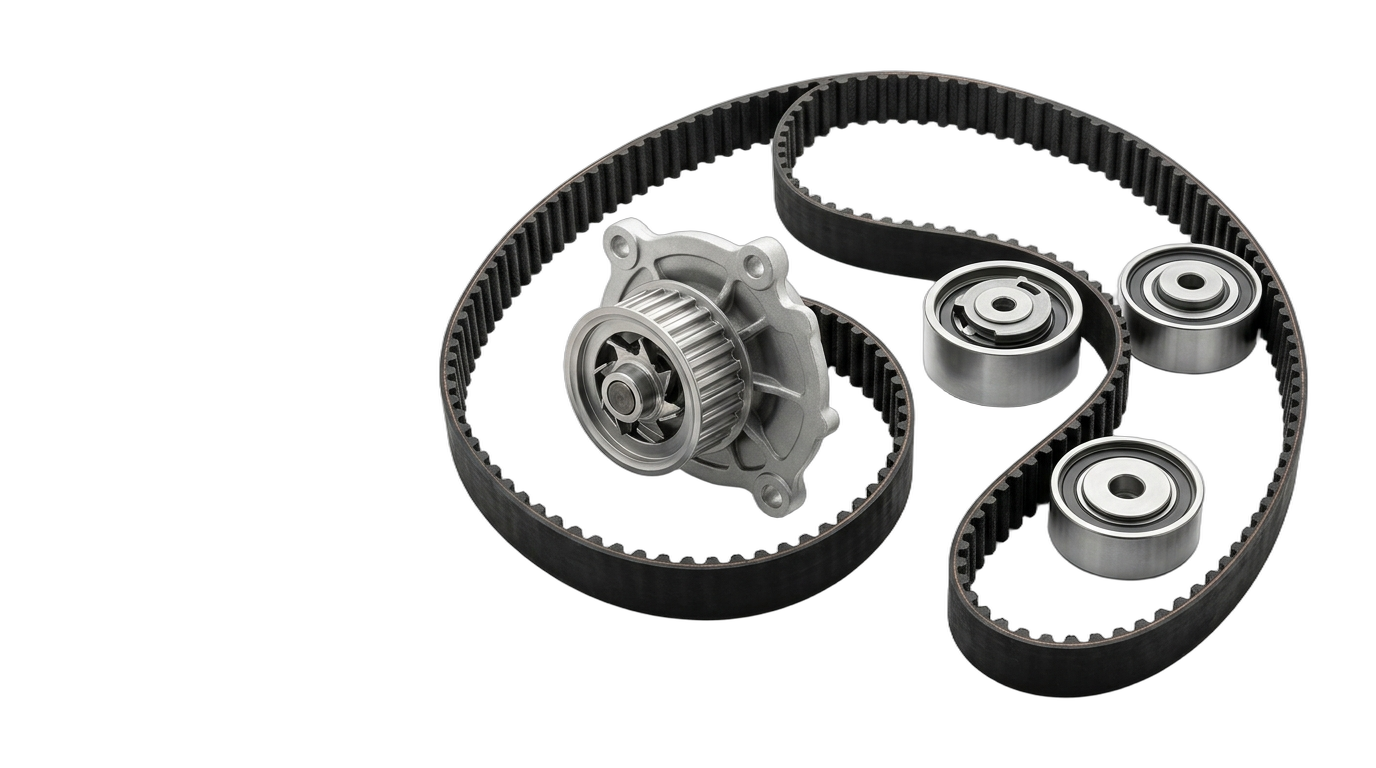
Volkswagens see predictable mileage-related repairs, especially on the 2.0T EA888 turbo family that has powered most of the lineup since 2008.
For supported Volkswagen vehicles, module requests may involve engine and transmission controls, body-control modules, steering-lock or immobilizer systems, and gateways. We diagnose the fault and review the exact vehicle and part before recommending replacement, programming, coding or adaptation. Bring the Volkswagen to the shop for this work.
See ECU & Module Diagnosis, Replacement and Programming for the full service scope and terms.
YOUR NEXT STEP
Choose a preferred day and arrival window online. The shop will follow up during business hours to confirm it.
Treat it as urgent. On Gen 1 and Gen 2 EA888 2.0T engines (roughly 2008-2014 GTI, Jetta GLI, Passat, and first-generation Tiguan), timing chain tensioner failure typically lands between 60,000 and 120,000 miles, and the warnings are exactly that cold-start rattle plus P0016/P0017 cam correlation codes. If the chain jumps, valves bend and the repair becomes an engine job, so have it inspected the same week you first hear the noise. The upgraded tensioner is the standard fix and closes the issue out.
A flashing gear display with harsh or delayed engagement, sometimes ending in limp mode, points to the mechatronic unit, the documented weak point of the DQ250 6-speed DSG. The repair is mechatronic replacement or rebuild, though some badly-shifting DSGs improve once they finally get the 40,000-mile fluid and filter service they missed. On-time fluid service is the best prevention there is, and the same discipline applies to the newer DQ381 7-speed.
On the Gen 3 EA888 in your Tiguan, the plastic water pump and thermostat module is the usual suspect, weeping between 60,000 and 90,000 miles, often where the coolant evaporates off hot parts before it can reach the ground. The fix is the updated revision of the module, which replaces the failure-prone original design. Do not settle into a topping-off routine; a turbo engine run low on coolant overheats, and that costs far more than the pump.
The Bosch CP4 pump on the 2009-2015 2.0L TDI is the known risk: when it fails, it sends metal debris through the entire fuel system and turns one failed part into a full fuel-system repair. Your best defenses are buying quality diesel from busy stations and treating hard starts or sudden rough running as urgent instead of driving through them. While you are watching that engine, remember the timing belt comes due at 130,000 miles; it is scheduled maintenance, not a surprise.
Yes, for supported Volkswagen vehicles and modules. Diagnosis and part compatibility come first, and the Volkswagen must be at our shop. See our ECU & Module Diagnosis, Replacement and Programming service for the full scope.
Testing that helps identify the cause of a warning, symptom, no-start, or electrical concern before repair.
Read more ›System-level repair for soft pedals, leaks, warnings, changed stopping, calipers, hydraulics, and ABS concerns.
Read more ›A European-vehicle specialty hub for choosing the right diagnostic, repair, or maintenance path.
Read more ›