


Car Diagnostics
Testing that helps identify the cause of a warning, symptom, no-start, or electrical concern before repair.
Read more ›Audi is part of the Volkswagen Group and shares engineering DNA with VW, Porsche, and Lamborghini. The current Audi lineup spans the A-series sedans (A3, A4, A5, A6, A7, A8), Q-series SUVs (Q3, Q5, Q7, Q8), the S/RS performance variants. Each model uses one of three engine families: the EA888 2.0L turbocharged inline-four (A3, A4, A5, Q3, Q5), the EA839 3.0L turbocharged V6 (A6, A7, Q7, SQ5), and the 4.0L twin-turbo V8 (S6, S7, S8, RS6, RS7, Q8). All current Audis are AWD (quattro) and most use ZF 8HP automatics or DSG dual-clutch transmissions.
Audi ownership philosophy is premium German engineering at a step below Mercedes/BMW pricing - sophisticated, tightly engineered, rewarding to drive - but every model demands scheduled maintenance using VW Group-approved parts and fluids. Skipping a DSG fluid service or running cheap oil in a TFSI engine accelerates well-documented failure patterns that turn a routine service into a major repair bill. Owners who keep Audi cars on the factory schedule can often reach high mileage.
Audi service follows VW Group's Long-Life Service framework with model-specific intervals.
full-synthetic oil approved to VW 504.00 / 507.00, 0W-30 or 5W-30 depending on engine. The TFSI engines (EA888 2.0L) are notorious for oil consumption when run on oil that does not meet the required standard - we recommend 7,500-mile intervals with proper VW-approved oil to control consumption and protect the high-pressure fuel pump cam follower. The 3.0T (EA839) supercharged/turbocharged engines need stricter oil discipline; 5,000-mile intervals on heavy-throttle drivers are well-justified. The 4.0L twin-turbo V8 demands tight oil discipline given turbo bearing loads.
60,000 miles on turbo engines (NGK platinum or factory-approved iridium). The 4.0T V8 spark plug change is labor-intensive (intake manifold removal) at the 60K interval.
Every 2 years according to VW's schedule. Modern Audis with electronic brake systems and the electronically controlled braking systems on these models are extremely sensitive to moisture-contaminated fluid. Old or moisture-contaminated brake fluid can contribute to ABS pump problems as mileage rises.
DSG dual-clutch automatics (S tronic on Audis) need fluid + filter service every 40,000 miles using DSG-approved ATF and the correct adapter for the transmission code. Skipping this service can contribute to mechatronic unit failures, which are among the most expensive units to replace. The ZF 8HP 8-speed automatic (A6, A7, A8, Q7, Q8) is more forgiving but still benefits from a fluid + filter service at 60,000-80,000 miles using ZF Lifeguard 8 fluid.
The coolant must meet the vehicle's factory requirements. Generic green coolant can damage a mixed-metal cooling system. Service timing and method depend on the model, history, and coolant condition. The plastic coolant components (thermostat housing, water pump housing) are wear items themselves.
The current EA888 and EA839 engines use timing chains (no scheduled replacement interval), but timing chain TENSIONER failure is a well-documented EA888 issue at 80,000-100,000 miles - listen for cold-start rattle on the timing side of the engine. Older Audis (pre-2010 A4/A6 with 1.8T or V6) used timing belts that require replacement every 105,000 miles; these are interference engines and a broken belt destroys the engine.
Premium 91+ octane is mandatory on every modern Audi, not recommended. The direct-injection turbocharged engines have aggressive timing and high cylinder pressures - running 87 octane causes long-term carbon buildup, knock, and eventual injector and piston damage. The most costly mistake is skipping the required octane.
SYSTEM-FOCUSED SERVICE
A warning, intermittent fault or no-start on a Audi can begin in more than one circuit. We use the symptom, scan data and direct measurements to narrow the cause.
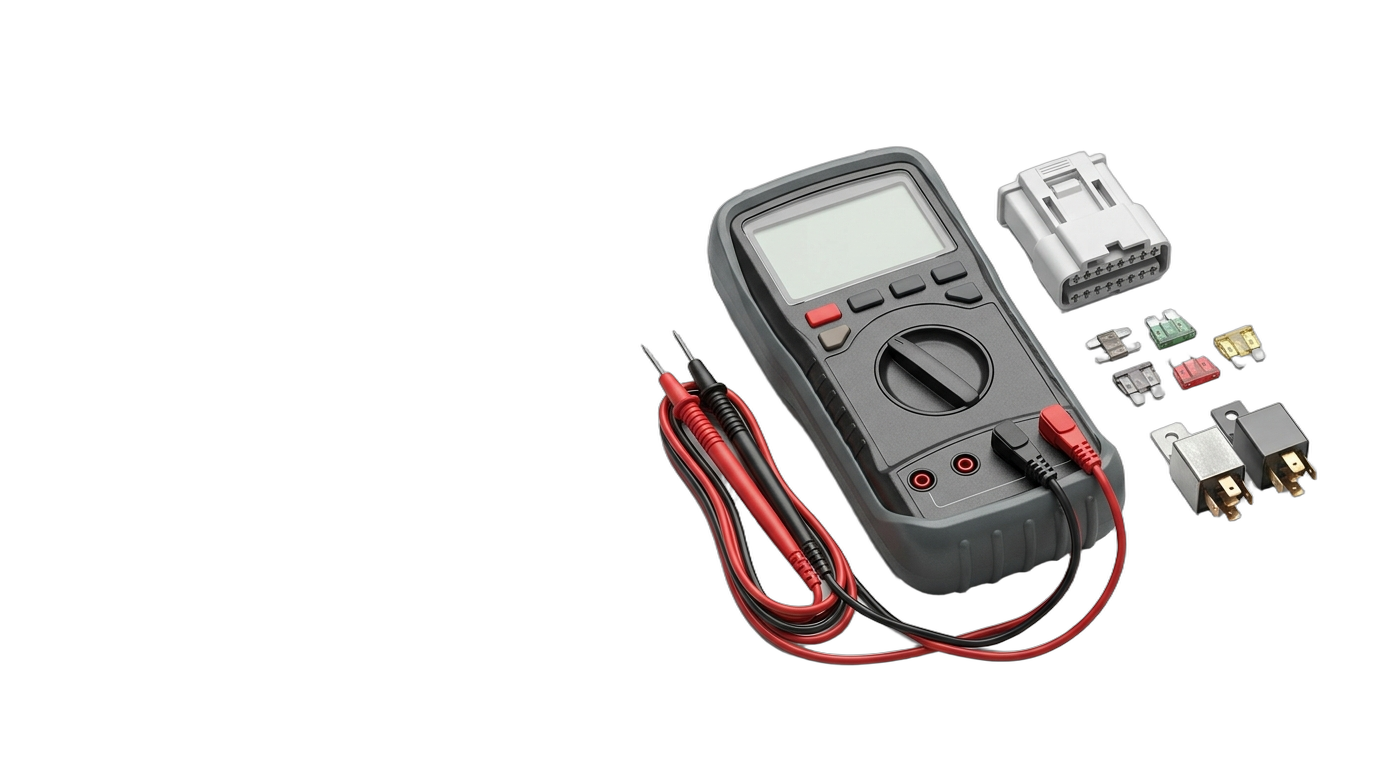
Audi repairs cluster by engine family and generation. Many expensive Audi repairs can be prevented with scheduled maintenance using VW Group-approved parts and fluids.
Catching these patterns early at scheduled service intervals can reduce the chance of a larger repair. Audi responds especially well to consistent maintenance.
When an Audi has a possible control-module fault, diagnosis comes before replacement. For supported vehicles, we can diagnose, remove and install, and program or adapt compatible engine, transmission, body, steering-lock or immobilizer, and gateway modules. The exact vehicle and part must be reviewed, and the Audi must be at our shop.
YOUR NEXT STEP
Choose a preferred day and arrival window online. The shop will follow up during business hours to confirm it.
Oil consumption on the EA888 2.0T is a documented pattern, and running oil outside the requirement makes it noticeably worse. These engines need a VW 504.00/507.00 approved 0W-30 or 5W-30, and 7,500-mile intervals do more for them than stretching to the factory maximum. Check the level regularly and top up with approved oil; a sudden jump in consumption or visible smoke deserves a proper consumption test instead of just adding more.
On the EA888 those cam correlation codes usually mean the timing chain tensioner is losing its hold, a well-documented failure between 80,000 and 120,000 miles that often comes with a brief rattle on cold starts. It is an interference engine, so a chain that jumps puts pistons into valves and turns a tensioner job into an engine job. The safe answer is no: have the tensioner inspected before racking up more cold starts, since that is the inexpensive path.
Direct-injection Audis coat their intake valves in carbon because fuel never washes over them, and by 80,000 to 100,000 miles the deposits commonly cause cold-start misfires, rough idle, and a flat mid-range. A look inside the intake with a borescope confirms it quickly. The established fix is walnut-shell blasting of the intake ports; it is not urgent the way a timing fault is, but the symptoms only build, so it pairs well with your next major service.
Yes, skipping the 40,000-mile S tronic (DSG) fluid and filter service can contribute to mechatronic failures, which typically hit between 80,000 and 120,000 miles. A failing mechatronic shows up as harsh shifts, slipping, flashing PRNDS lights, and limp mode, and replacement is one of the most expensive repairs on the car. Against that, staying on the 40,000-mile fluid schedule is the cheapest protection the drivetrain has.
Yes, for supported Audi vehicles and modules. We diagnose the fault and review compatibility before recommending replacement or programming, and the Audi must be at our shop. See our ECU & Module Diagnosis, Replacement and Programming service for the full scope.
Testing that helps identify the cause of a warning, symptom, no-start, or electrical concern before repair.
Read more ›System-level repair for soft pedals, leaks, warnings, changed stopping, calipers, hydraulics, and ABS concerns.
Read more ›ECU and control-module diagnosis, replacement and programming for supported Audi, BMW, Mercedes-Benz and Volkswagen vehicles. Porsche may be accepted after compatibility review.
Read more ›